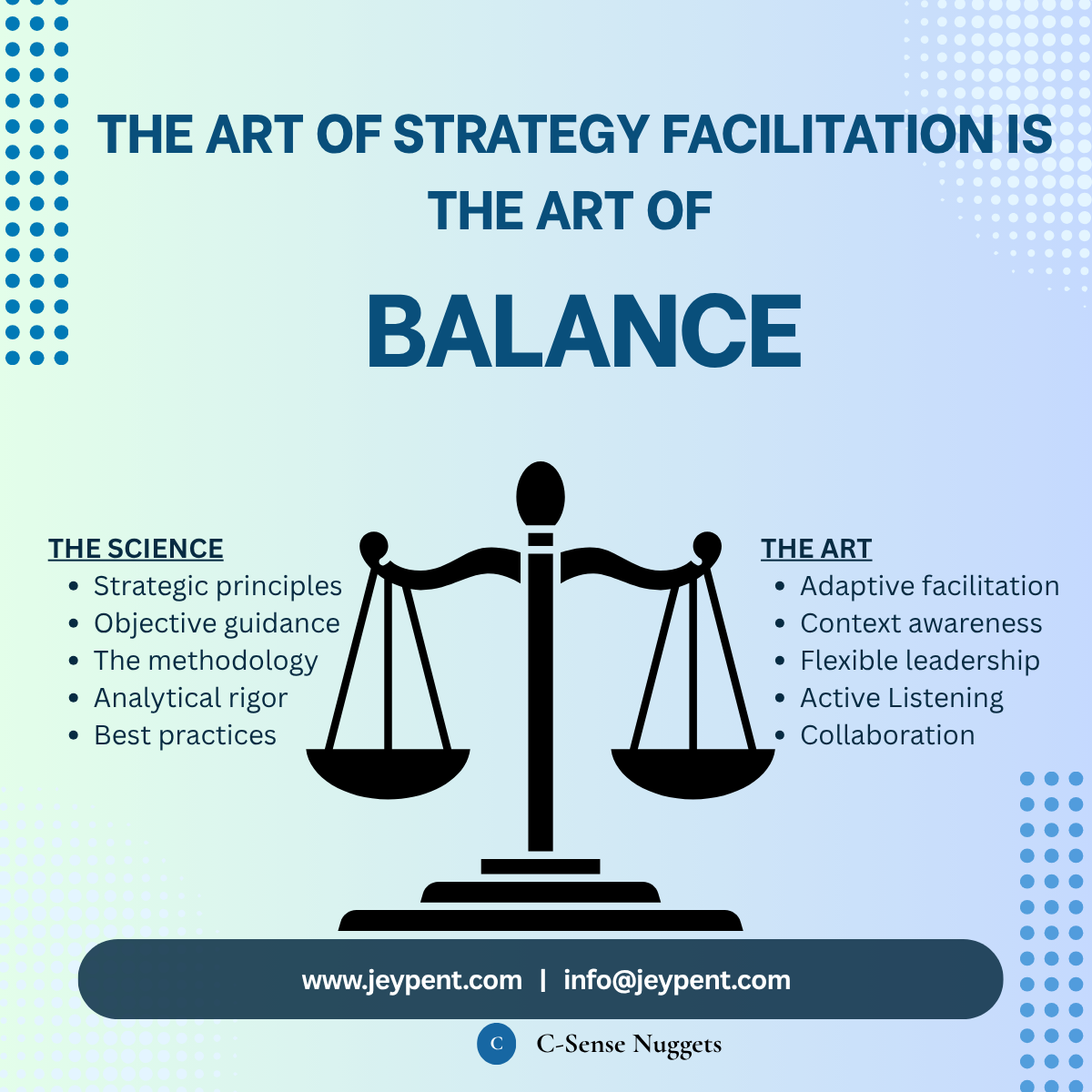
Strategy development is both a science and an art: both from a facilitator’s and the facilitated team’s standpoint. An effective strategy development facilitator needs to have this at the top of their mind throughout the process. While wearing the science hat, the facilitator, by being reasonably rigid, helps the team that they are guiding to see and apply the principles of good strategy development; because these are principles. For example, while crafting the vision and mission statements, it helps to guide the team in making the statements terse, easy to remember but also to convey the fundamentals that must be complied with. Wearing the art hat helps the facilitator to be flexible, adaptive and open to the team’s thoughts, preferences and contextual realities as an objective advisor.
Over the years, my C-sense approach to facilitating strategy development entails
At the end of the day, the success of a strategy largely depends on the organization being facilitated to come up with, the excellence of the facilitator notwithstanding.