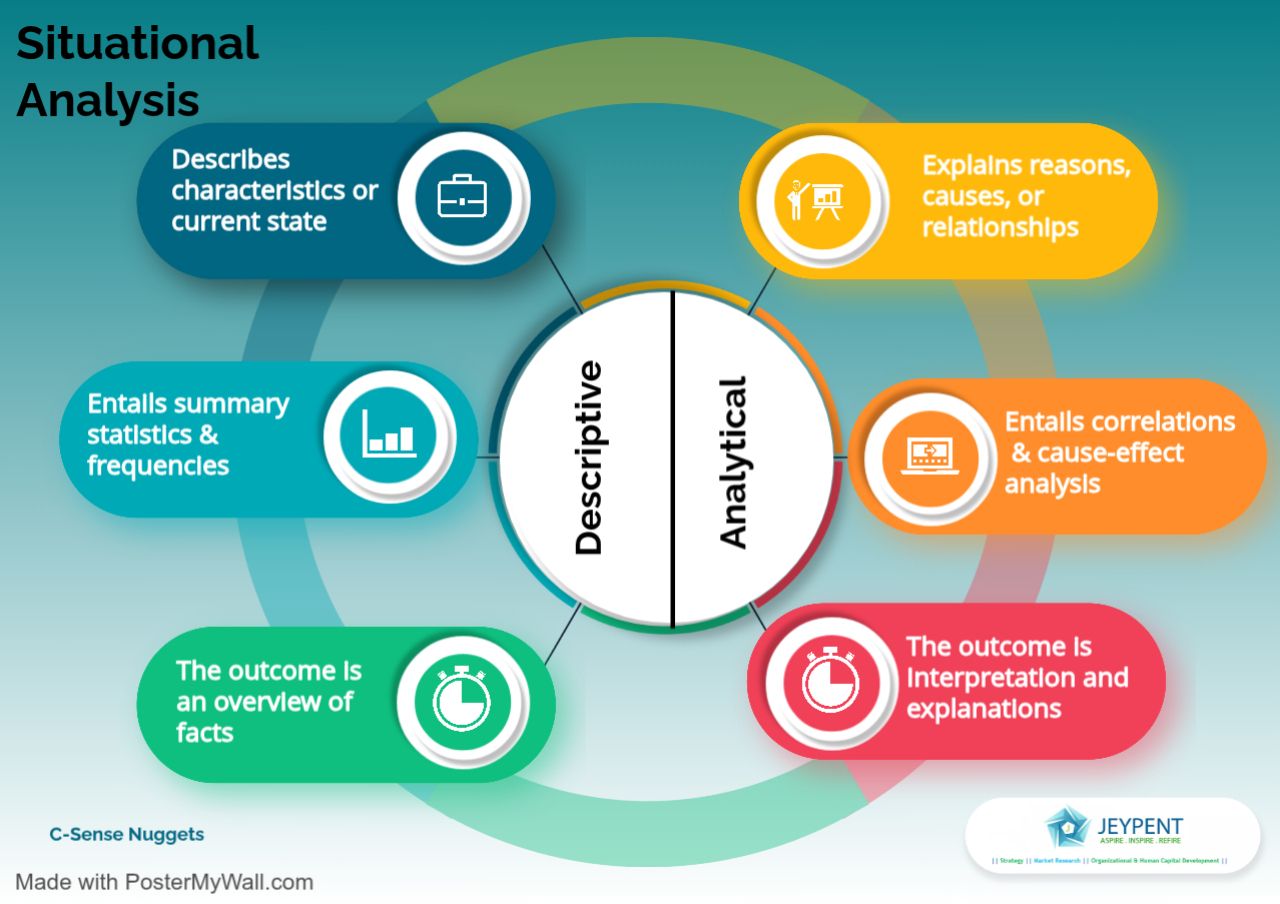
It is common knowledge that when developing a strategy, an analysis of the environment in which an organization operates is essential. Such an analysis helps identify the critical internal and external factors that the organization faces and what its strategic response should be.
However, one of the most common weaknesses in strategic planning is that situation analyses often stop at description. Organizations invest significant effort in documenting trends, challenges, stakeholder expectations, strengths, weaknesses, opportunities, and threats, yet fail to answer the most important question:
“So what?”
A useful situational analysis should do more than describe the current state of affairs. It should generate insight. It should help the organization understand the #strategicimplications of the issues identified and guide #decisionmaking on where to focus, what to prioritize, what to stop doing, and how to sustain or enhance its competitive advantage.
Unfortunately, many situation analyses are disjointed from the strategy itself. The findings and the strategic priorities and actions are presented, with little evidence of how one informed the other. The result is a strategy that is not grounded in the realities of the organization’s operating environment.
The true value of a situation analysis lies not in the volume of information collected, but in its ability to answer questions such as:
Before concluding your next situation analysis, ask yourself:
‘’If we removed the strategic priorities section from our plan, would a reader be able to infer our strategic choices directly from the analysis?’’
If the answer is no, then the analysis may be descriptive, but not yet strategic.