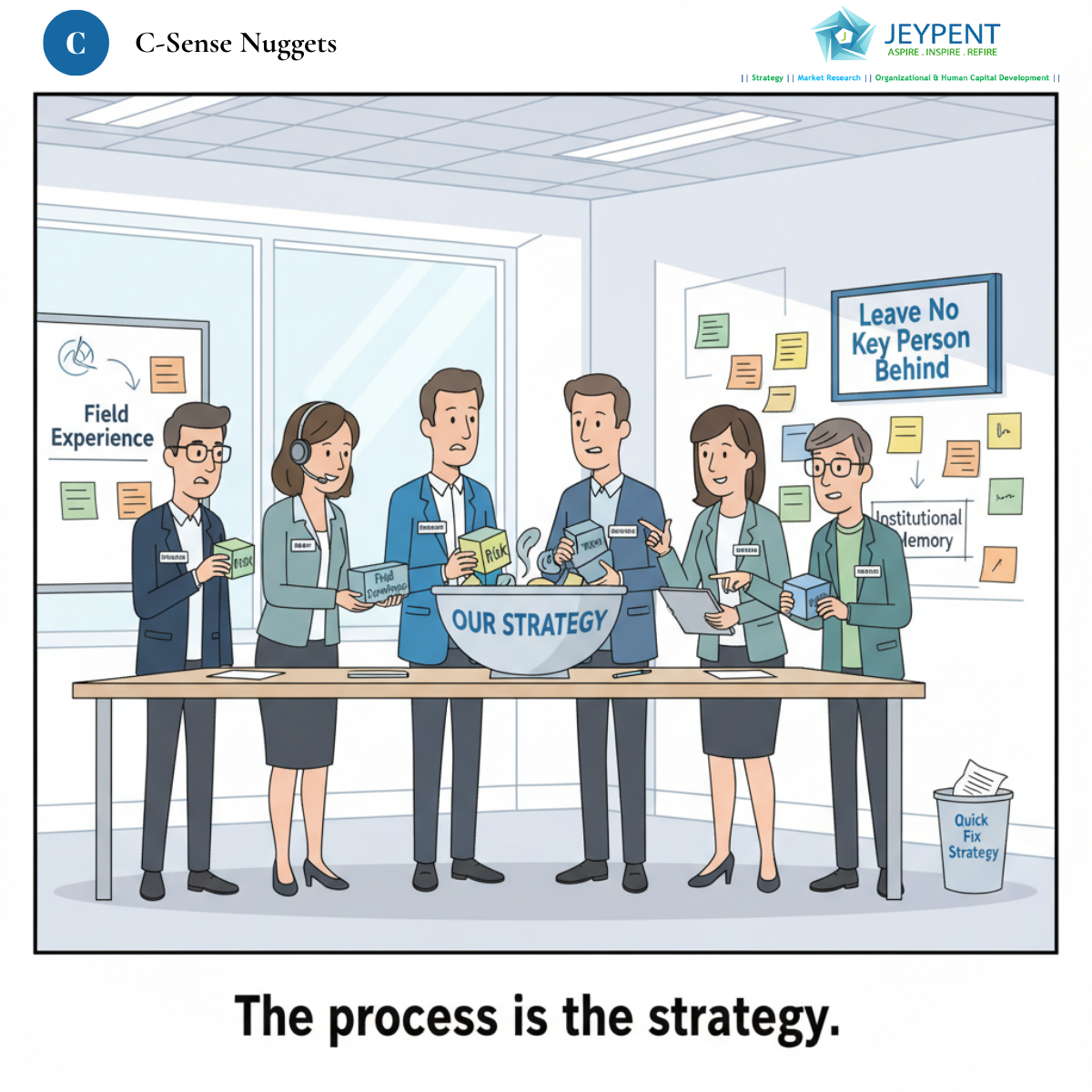
They say that there are no gains without pain. This statement is also applicable in the strategic planning process. While the benefits of making the strategic planning process participatory are immense as highlighted in the previous piece, there can and are usually awkward moments in doing so. Focusing on the benefits makes the pain bearable. Leaders and facilitators involved in the strategic planning process need to anticipate the challenges and plan on appropriate approaches to navigate them. In this article, I cover the top five C-sense challenges of making the process participatory.
- Price: Depending on how extensive the engagement needs to be and how spread out the stakeholders are, considerable financial and human resources might pose a hefty price and hence a challenge. Stakeholders’ engagement can be complex and labour-intensive. Leaders need to strike a delicate balance between the resources to be invested and meaningful representation. A reasonable consideration of the price of making the process participatory is critical. Finally, it is like education, if you think it is expensive, try ignorance. The cost of not making the process participatory is way higher, including an irrelevant strategy, lack or poor execution, and disengaged key stakeholders ultimately rendering the entire product useless.
- Pace: Participatory strategic planning is usually time-consuming. It can be viewed as an unnecessary slowdown to an “obvious” process. Leaders must determine whether they want to move fast or far: as they say, you want to move fast, move alone, but if you want to move far, move with others.
- Politics: Here I mean the negative aspects of organizational politics. In some strategic planning processes, the leaders are “doomed if they make the process participatory, and damned if they do not”. Some of the stakeholders take it as an opportunity to settle scores, raise unnecessary, and irrelevant issues. If they are not involved, they sabotage the process and/or the output. Wisdom is for the leadership to carefully consider the extent to which such persons need to be involved, their contribution, the risk and make decisions in the interest of the greater good. Two wisdom nuggets come to mind regarding dealing with such stakeholders:
“Toxic stakeholders aren’t your job to fix, but they are your job to navigate. Power plays lose their grip when you lead with clarity, not ego.” — Liam Darmody
“The best way to minimize disagreement is to make sure that all the stakeholders are in the room.” — Cheryl Yeoh
- Dissent: Participation opens the door for dissent. While dissent is beneficial because it brings the table perspectives that may never have been considered, it is usually not comfortable. It takes mature, humble, and truly strategic leadership to welcome divergent voices. The words of Doug Baldwin are instructive: “The greatest tragedy for any human being is going through their entire lives believing the only perspective that matters are their own.”
- Derailment: Not all participation will be strategic. Some stakeholders will be fixated with the tactical and operational and could significantly derail the process. Depending on their interest-contribution, power, influence and impact, it may still be helpful for them to have their say even if not their way. It is not so much what they say but how the leadership “cuts through the fat” to pick what may be on the surface, tactical and decipher how it fits within the overall strategic direction. As John Bryan said, “You have to be willing sometimes to listen to some remarkable bad opinions. Because if you say to someone, ‘That’s the silliest thing I’ve ever heard; get on out of here!’ — then you’ll never get anything out of that person again…” and for a strategic planning process, never getting anything out of some people may prove suicidal.
What would you say are other challenges of making strategic planning processes participatory? Do you still think making the processes participatory is worth the pain?